The Regional Opportunities Investment Tax Credit (ROITC) is a 10% refundable Ontario corporate income tax credit for Canadian-controlled private corporations that spend more than $50,000 to construct, renovate or acquire eligible commercial and industrial buildings in designated regions. The most it pays is $45,000 a year.
It is ending. Ontario says the credit is repealed effective January 1, 2027, and expenditures must be incurred on or before December 31, 2026. If you have a building project under way in Northern Ontario, or in one of the listed eastern and southwestern counties, this is the year-end item to raise with your accountant now.
The credit at a glance
The expiry was proposed in the 2026 Ontario Budget on March 26, 2026, and the CRA's what is new for corporations page now says the credit will expire for expenditures incurred after 2026.
Who qualifies
Ontario's technical bulletin sets out the tests. The corporation must:
- Be a Canadian-controlled private corporation throughout the taxation year.
- Carry on business through a permanent establishment in Ontario when the eligible investment is made.
- Not be exempt from tax under Part III of the Taxation Act, 2007 (Ontario).
- Make the investment in a designated region, with the property wholly located in that region.
Two things do not matter. The bulletin says the location of the head office is not relevant, and the number of employees is not a factor. A company based in Toronto that meets the other tests can claim on a building it renovates in Sudbury.
Only one corporation in an associated group may claim. The credit is nil unless each of the other associated corporations has agreed in writing to waive its right to claim for any overlapping taxation year. The CRA asks you to keep those waivers and not file them with the schedule.
What spending counts, and what does not
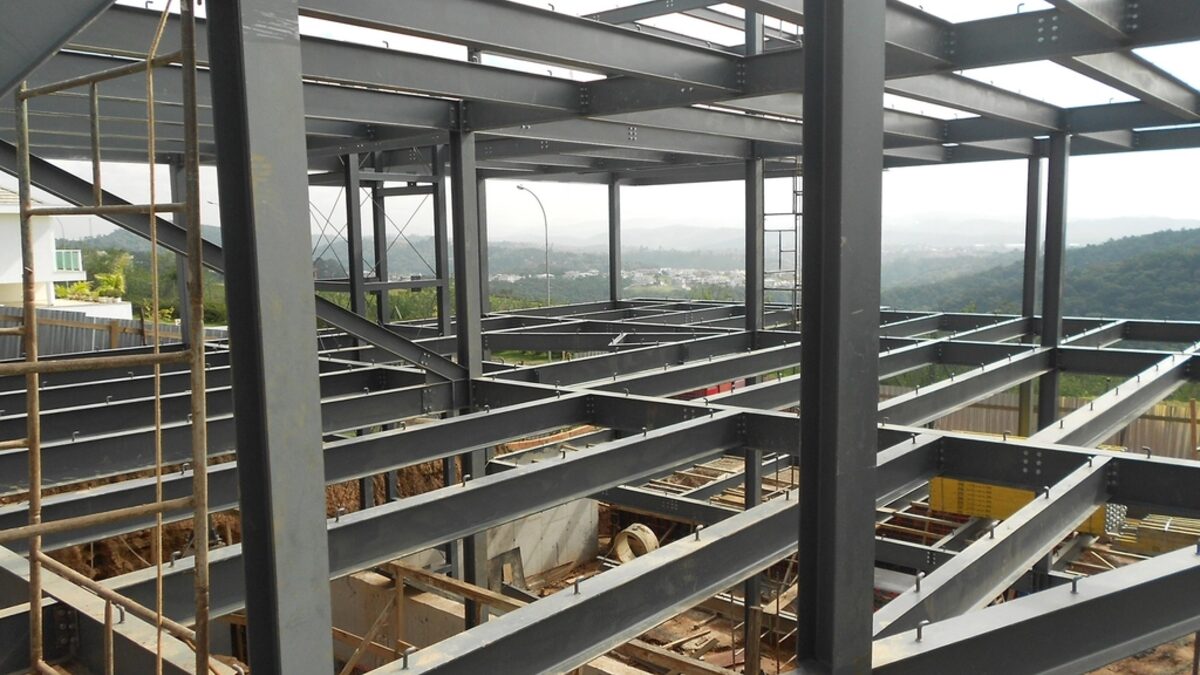
This is a buildings credit. Eligible property is depreciable property in Class 1 or Class 6 of Schedule II to the Income Tax Regulations, and eligible expenditures are capital costs to acquire, renovate or add to that property. Ontario's page describes it as commercial or industrial buildings or other structures.
Machinery and equipment are not named. Neither Ontario's page nor its technical bulletin lists machinery or equipment as eligible, and the classes named are 1 and 6 only. Do not budget this credit against a new production line without your accountant confirming the capital cost allowance class.
The exclusions to check before you count on the money:
- Residential use. Residential buildings are not eligible. For a building, or an addition or alteration to one, at least 90% of the floor space must be used for a non-residential purpose at the end of the taxation year.
- Related-party contracts. Expenses under a contract with a person or partnership you do not deal with at arm's length are not eligible.
- Related-party purchases. Property acquired from a non-arm's-length person, or previously owned by you or a non-arm's-length person, is excluded.
- Options. Property acquired from a person who holds, or who granted, a right or option to acquire it in the future is excluded.
- Class 1 by election. Class 1 property resulting from an election under subsection 1103(1) of the Regulations is excluded unless it would otherwise have been in Class 6.
The designated regions
The CRA summarizes the region as, in general, the north, the east except the Ottawa region, and the southwest of Ontario. Use the list, not the summary. The building must be wholly inside one of these areas.
Northern Ontario
The Districts of Algoma, Cochrane, Kenora, Manitoulin, Nipissing, Parry Sound, Rainy River, Sudbury (together with the City of Greater Sudbury), Thunder Bay and Timiskaming.
Southern Ontario
- City of Kawartha Lakes; District of Muskoka; Municipality of Chatham-Kent
- Counties of Bruce, Grey, Haliburton, Huron, Lambton, Northumberland, Oxford and Prince Edward
- County of Elgin with the City of St. Thomas; County of Essex with the City of Windsor and Township of Pelee
- County of Frontenac with the City of Kingston; County of Hastings with the Cities of Belleville and Quinte West
- County of Lanark with the Town of Smiths Falls; County of Lennox and Addington
- County of Middlesex with the City of London; County of Perth with the City of Stratford and Town of St. Marys
- County of Peterborough with the City of Peterborough; County of Renfrew with the City of Pembroke
- United Counties of Leeds and Grenville with the City of Brockville and the Towns of Gananoque and Prescott
- United Counties of Prescott and Russell; United Counties of Stormont, Dundas and Glengarry with the City of Cornwall
The math
The credit is 10% of what you spend above the first $50,000, on up to $500,000 of expenditures in the taxation year. Expenditures across properties are added together, and the credit is capped at $45,000 for all eligible properties in the year. It is prorated for short taxation years.
- $50,000 of eligible spending: no credit, because the spending must exceed $50,000.
- $200,000: 10% of ($200,000 minus $50,000) = $15,000. This is Ontario's own example.
- $500,000: 10% of ($500,000 minus $50,000) = $45,000, the annual maximum.
- $900,000 in one taxation year: still $45,000, because the limit is $500,000 of expenditures.
It is refundable. If your tax liability for the year is reduced to nil, the bulletin says the credit you are entitled to becomes a refund to the corporation. The bulletin also says an unused balance can be carried forward to the following taxation year, so ask your accountant how both apply to you.
The timing questions to settle now
There are two separate dates in the rules, and they are easy to run together:
- When the expenditure is incurred. On or before December 31, 2026. Expenditures may be incurred over one or more taxation years, up to and including the year the property becomes available for use.
- When the property becomes available for use. It must become available for use in the taxation year you claim the credit, and on or after March 25, 2020. Ontario's bulletin points to subsection 13(26) of the Income Tax Act (Canada) for that test.
Open question for a project finishing in 2027. The pages we read do not say how the credit applies when costs are incurred by December 31, 2026 but the building only becomes available for use after that date. Get your tax adviser's answer in writing before you rely on it.
The pages also do not address stacking or how other government assistance affects the eligible amount. If the project has a grant or another credit attached, ask that question at the same time.
What to prepare
You claim it on your T2 return, and the CRA administers it for Ontario. The work is in having the file ready to support the claim:
- The property address, matched to a named area in the designated region list.
- Confirmation of your CCPC status for the whole taxation year, and of your Ontario permanent establishment.
- Your accountant's view on the capital cost allowance class of each cost.
- Contracts and invoices showing who was paid, when the cost was incurred, and that each supplier deals with you at arm's length.
- Floor space by use, if the building has any residential component.
- Evidence of the date the property became available for use.
- Written waivers from any associated corporations.
To claim, file Schedule 570 with your T2 return and enter the amount on line 472 of Schedule 5, according to the CRA.
Mistakes to avoid
- Assuming a contract signed before year end is enough, without asking your accountant whether the expenditure is actually incurred by December 31.
- Counting equipment or fit-out costs that are not in Class 1 or 6.
- Relying on the general description of the region instead of checking the named county or district.
- Using a related contractor or buying from a related company, then finding the cost excluded.
- Forgetting that the first $50,000 earns nothing: on $60,000 of spending the credit is $1,000.
- Leaving out waivers from associated corporations, which reduces the credit to nil.
A realistic timeline to December 31
- This week: check the address against the region list and ask your accountant about the class of each cost.
- By mid-November: settle the two timing questions above, and confirm which costs can realistically be incurred in 2026.
- By early December: confirm arm's-length status for each contractor and collect waivers from associated corporations.
- December 31: last day for eligible expenditures to be incurred.
- At filing: file Schedule 570 with the T2 for the taxation year of the claim, and keep the supporting file.
The dates other than December 31 are our suggestion, not program rules. If this credit does not fit, look at the Ontario R&D credits on capital equipment or the Eastern and Southwestern Ontario Development Funds, or run your company through the Grant Finder.
Frequently asked questions
What is the deadline for the Ontario Regional Opportunities Investment Tax Credit?
Ontario says the credit is repealed effective January 1, 2027, and expenditures must be incurred on or before December 31, 2026 to be eligible. The claim itself is made on the T2 return for the taxation year.
How much is the Regional Opportunities Investment Tax Credit worth?
It is 10% of eligible expenditures above $50,000, with a limit of $500,000 of expenditures in the taxation year. The maximum credit is $45,000 per year. It is refundable.
Who is eligible for the ROITC?
A Canadian-controlled private corporation throughout the taxation year, with a permanent establishment in Ontario when the investment is made, investing in a designated region. The location of the head office and the number of employees are not factors.
Does the ROITC cover machinery and equipment?
Ontario's page and technical bulletin describe commercial and industrial buildings and other structures in capital cost allowance Class 1 or 6. They do not name machinery or equipment, so confirm the class of any cost with your accountant.
How do I claim the ROITC?
According to the CRA, you file a completed Schedule 570 with your T2 return and enter the credit on line 472 of Schedule 5. Filing the schedule confirms you have waivers from associated corporations, which you keep in case the CRA asks for them.
Is Toronto or Ottawa a designated region?
Neither appears on Ontario's list of designated regions, and the CRA describes the eastern part of the region as excluding the Ottawa region. A company based in either city that meets the other tests can claim on a building located in a designated region.
Check it before year end
Book a call and we will go through your project, the region and the timing with you. We cannot promise an outcome.
Book a free 30-minute consult →